




Photo by 海陵融媒
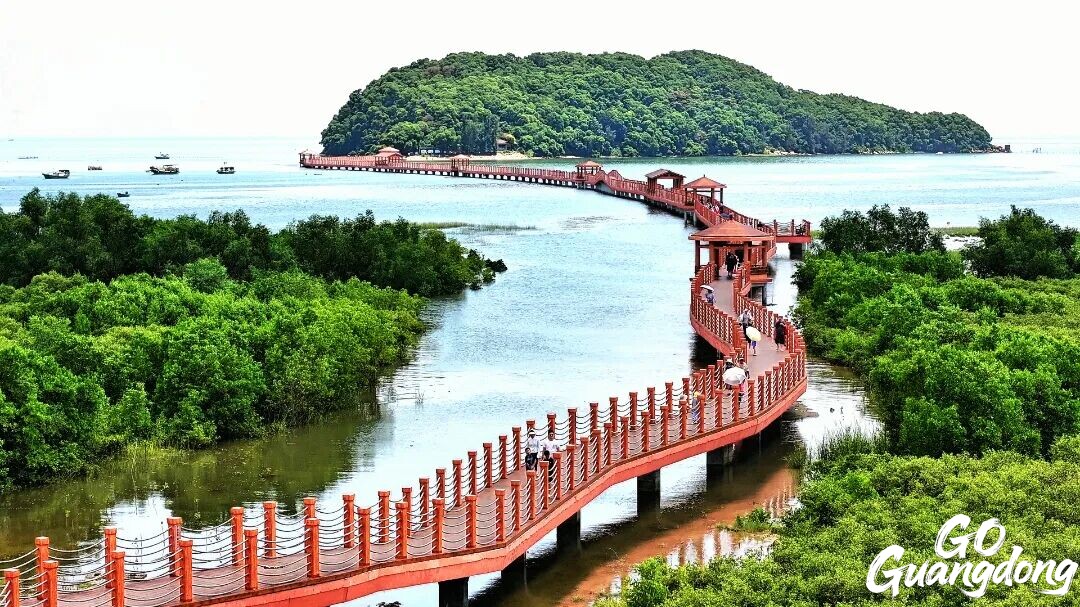
Nestled in the northeastern of Hailing Island, Yangjiang, Hailing Island Mangrove National Wetland Park is a multi-functional ecological area that showcases subtropical mangrove wetlands and its conservation. It also offers scenic hiking trails and environmental education. After a major renovation in recent years, it has become a popular tourist destination and a living classroom for nature lovers.
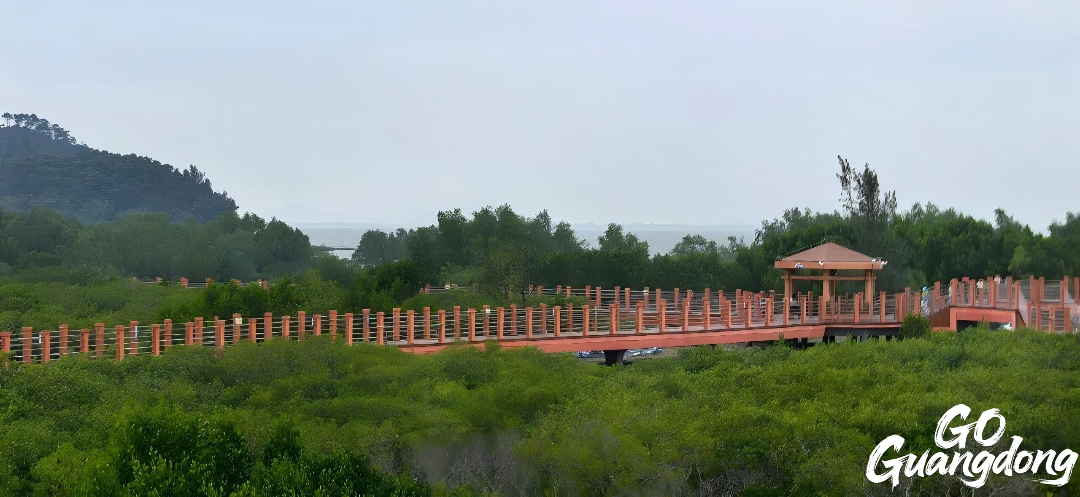
Photo by 广东省阳江市旅游协会
A living ecosystem with rich biodiversity
As a key trading hub on the ancient Maritime Silk Road, Yangjiang once saw merchant ships sailing along its mangrove-fringed coastlines. These forests provided safe harbors for vessels and supplied abundant seafood to replenish sailors' provisions. Today, while preserving the Silk Road legacies, Yangjiang has also intensified efforts to protect and expand mangrove habitats—with Hailing Island Mangrove National Wetland Park serving as a shining example.
Spanning 475.87 hectares, the park is now recognized as one of Hailing Island's "New Eight Scenic Spots" and was designated as a national 3A-Level attraction in 2024.
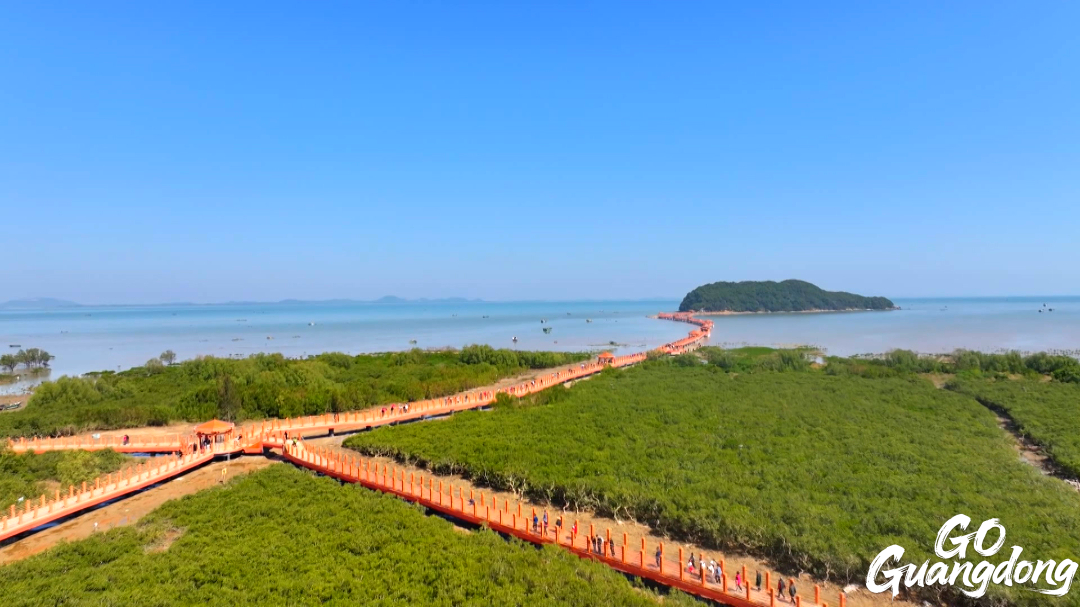
Photo by Maritime Silk Road Museum of Guangdong
Entering the wetland park, visitors encounter vast stretches of lush mangroves. A 1,500-meter-long, 3-meter-wide yellow boardwalk meanders through the greenery. Walking along the cross-sea pathway, tourists can enjoy refreshing sea breezes, panoramic ocean views, and the vibrant greenery of mangroves.
The park boasts around 87 hectares of mangroves, featuring native species including the Avicennia marina, Kandelia obovata, and Aegiceras corniculatum. Recently introduced true mangroves such as Rhizophora stylosa and Bruguiera gymnorrhiza, along with semi-mangroves including Cerbera manghas and Syzygium aqueum, further enriched the habitat.
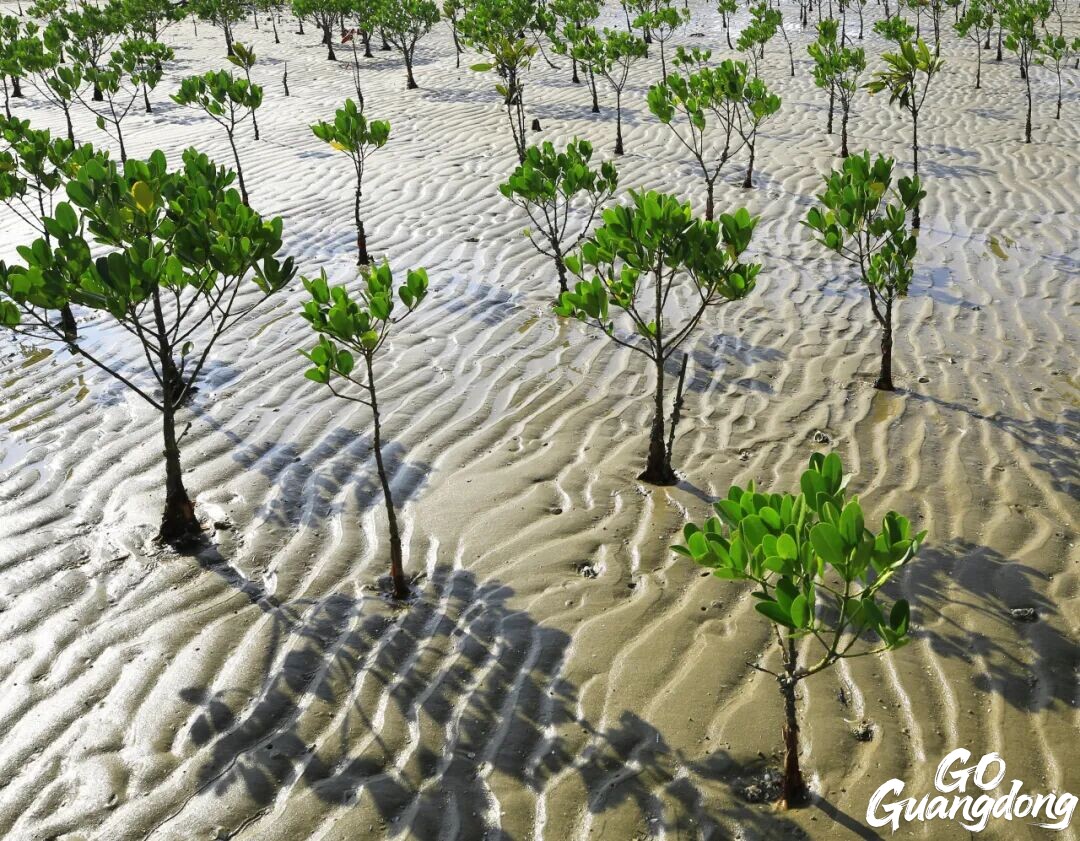
Photo by 广东省湿地保护协会
With intelligent management and scientific reforestation, the park has expanded its mangrove coverage from 25 hectares to 87 hectares, boosting survival rates from 30 percent to 80 percent. This has significantly enhanced the wetland's ecological functions.
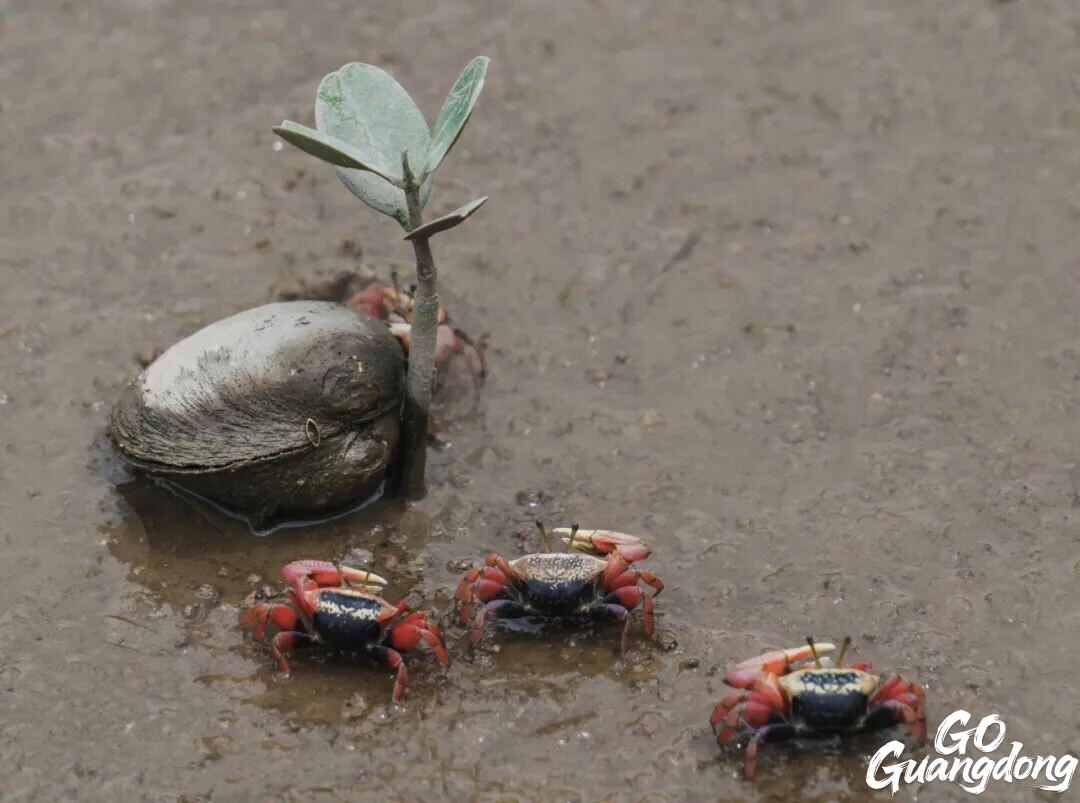
Photo by 广东省湿地保护协会
Each summer, the warm temperature injects vitality into the tidal flats as thousands of fiddler crabs emerge from their burrows. Following the tide cycles, coastal residents catch small crabs or collect shells from the exposed flats and reefs. This is an activity called "Gǎn hǎi (赶海)", which means foraging for products from the sea. This timeless practice has evolved into a popular hands-on experience for visitors.
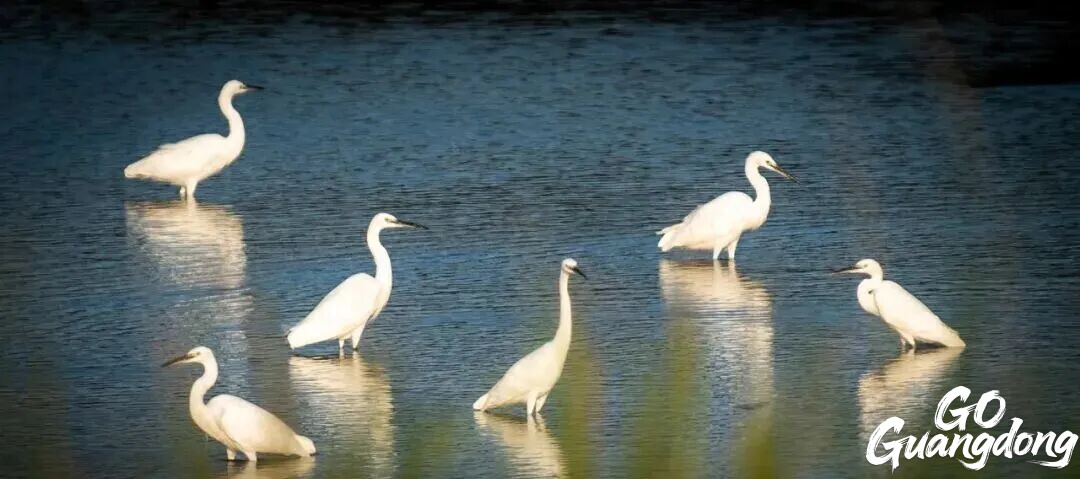
Photo by 广东省湿地保护协会
Birdwatchers will be thrilled that 275 bird species have been recorded in the park and its surroundings. Among them, 28 are under national key protection, while 49 are protected at the Guangdong provincial level. Egrets, herons, plovers, sandpipers, and gulls are most frequently seen, along with rails and kingfishers.
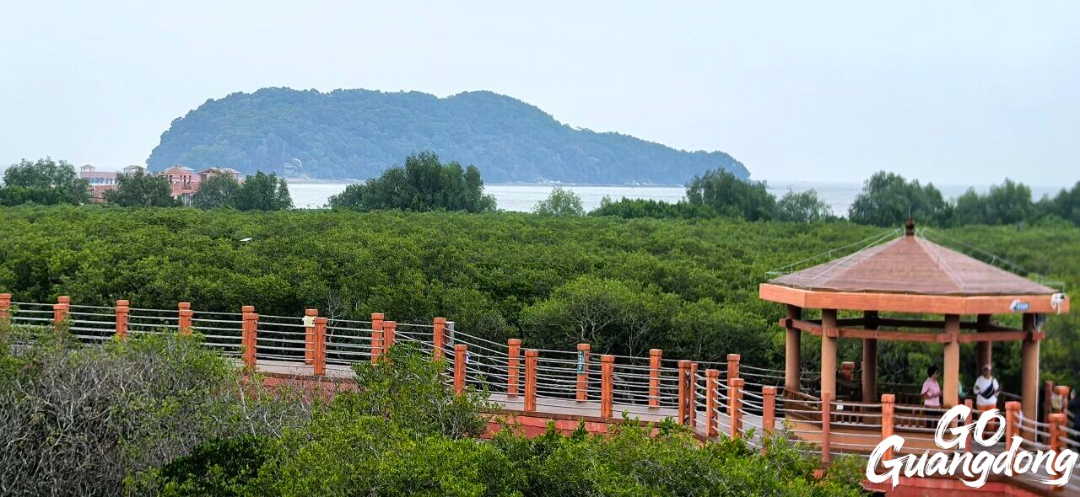
Photo by 广东省阳江市旅游协会
Facilities upgraded to enhance ecological education
Leveraging its mangrove ecosystem, the park promotes environmental education through facilities including exhibition corridors and education centers. These spaces allow visitors to learn about mangrove ecology and marine biodiversity while enjoying their visit.
In February 2024, the park completed a series of upgrades to improve the visitor experience. The cross-sea boardwalk has been widened from the original 2 meters to 3 meters. Additionally, pavilions and resting areas have been newly installed. The existing four pavilions have been renovated. All observation decks and pavilions are now equipped with decorative lighting, enhancing convenience and atmosphere for sightseers.
Furthermore, the park has strengthened environmental maintenance and safety patrols across key areas, such as the tidal flats and boardwalks, ensuring a clean, secure, and enjoyable experience for every visitor.
Address: Intersection of Provincial Highway 277 and Taifu Avenue, Hailing Island, Yangjiang City
Opening Hours: 08:00 AM – 06:30 PM
Admission Fee: ¥30 per person
Reporter | Zhou Jiyin, Wu Chuting (Intern)
Editor | Yin Juewen