




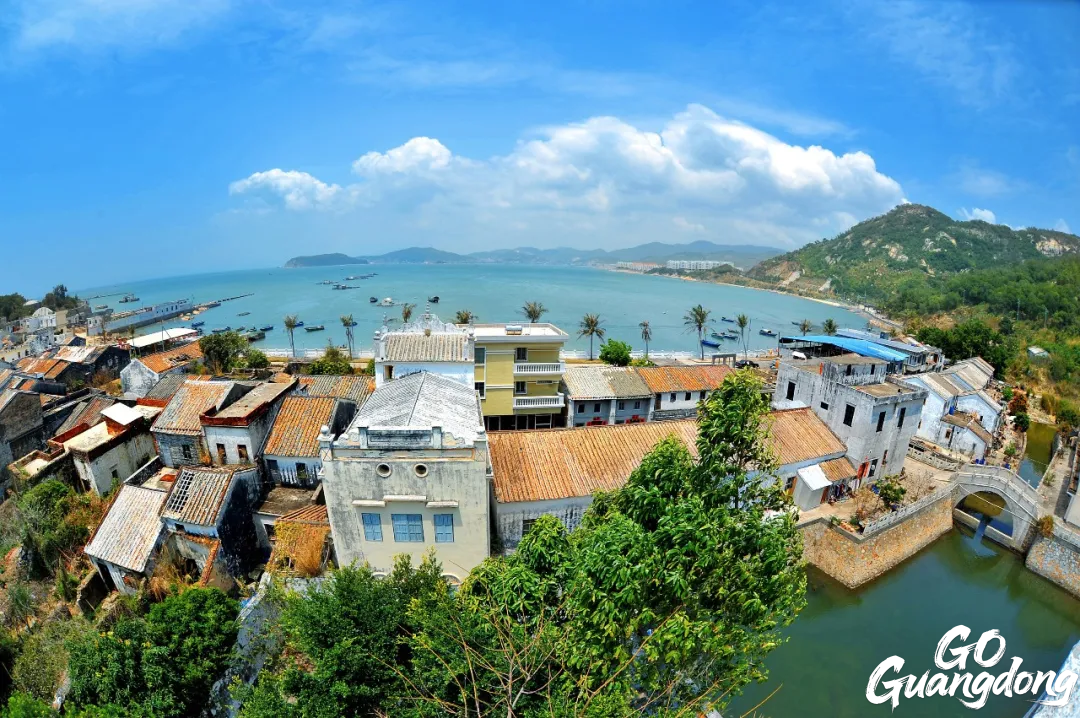
Photo by 广东阳江发布
Nestled in the southeast of Dongping County, Yangjiang, Da'ao is awell-preserved ancient fishing village in China, retaining its original maritime features. After centuries of ups and downs, this millennium-old village has been revitalized as a 4A-level tourist attraction showcasing unique fishing history and culture.
Chinese pivotal maritime hub sees ups and downs
The Chinese character "澳 (Ao)" refers to a bay where ships can anchor and depart. Indeed, Da'ao's development has always been tied to the sea.
Founded during the Tang (618-907 AD) and Song (960-1279 AD) dynasties, the 648-hectare village is surrounded by sea on three sides. It served as a pivotal hub on the ancient Maritime Silk Road. Merchant ships from Quanzhou, Chaozhou, and Guangzhou set off here for their routes to South Asia, Europe, and Africa. The renowned Song Dynasty shipwreck "Nanhai I" was discovered in the waters off the Da'ao port.
At that time, Da'ao was regarded as the top among Yangjiang's six ancient ports for its thriving, bustling economy. What's more, it was the first port encountered by ships along the maritime route departing from Guangzhou to Xuwen.
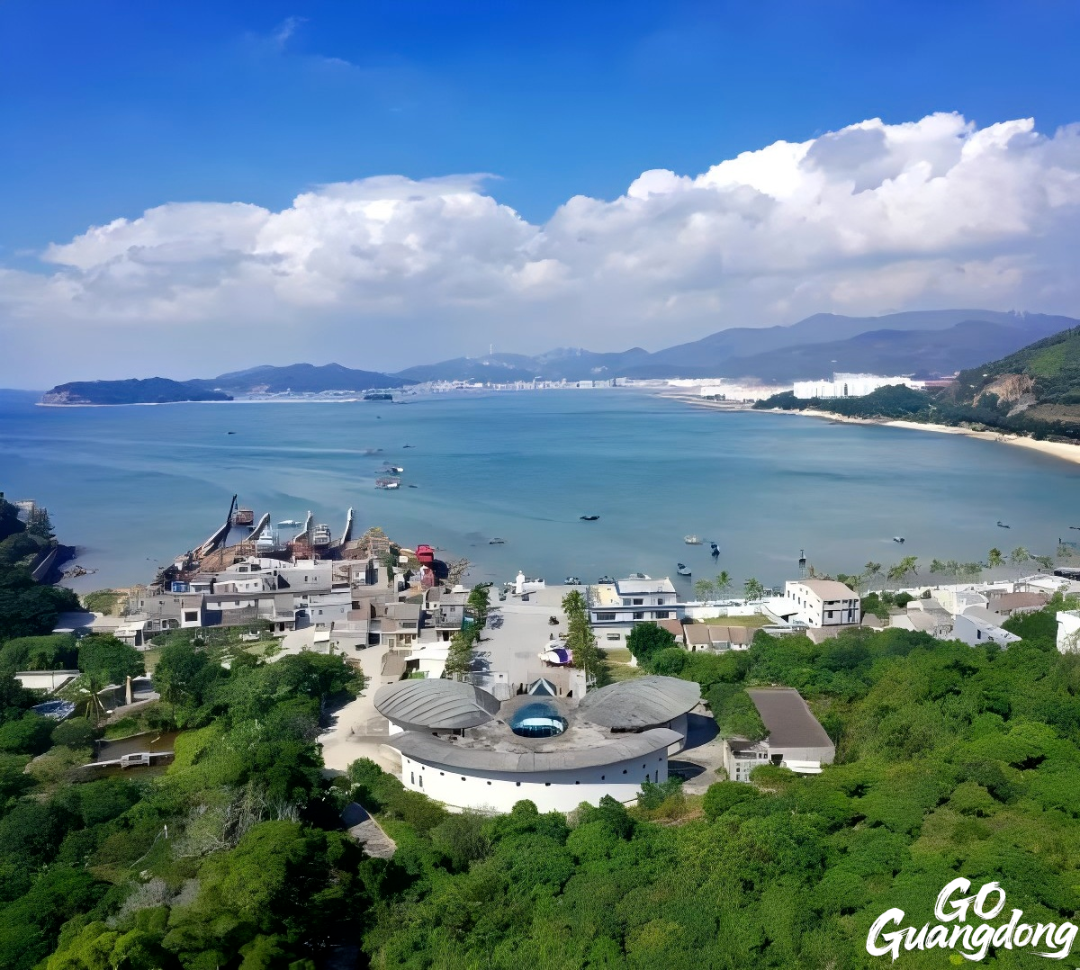
The ancient Da'ao Port, photo by 东平镇政府
At its most prosperous time during the Ming (1368-1644 AD) and Qing (1636-1912 AD) dynasties, Da'ao bustled with shops and merchants. It was once renowned as the "Oriental Venice" and rivaled the Thirteen Hongs in Guangzhou.
However, tragedy struck in the late Qing Dynasty when a powerful typhoon sank all ships in the harbor and destroyed most buildings. Further decline came in 1923 amid warlord conflicts and pirate raids. Pirates grew rampant around the Chinese People's War of Resistance Against Japanese Aggression, turning Da'ao into ruins. As a result, residents fled and relocated to Dongping Town nearby.
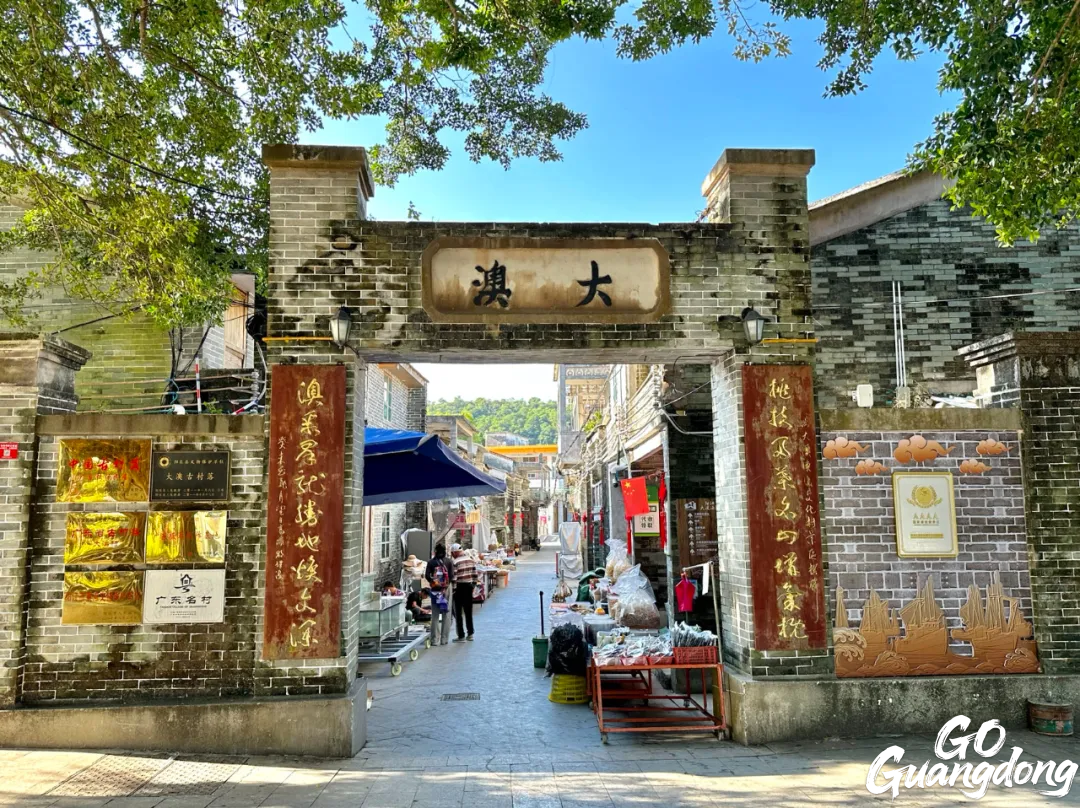
Photo by 广东阳江发布, photographer Ren Minghao
Ancient fishing village revived into a favorable vocation destination
Since the establishment of the People's Republic of China, Da'ao Ancient Port underwent restoration. In recent years, driven by rural revitalization, Da'ao has transformed into one of "Guangdong's Most Beautiful Villages" and was designated a national 4A-level tourist attraction in 2023.
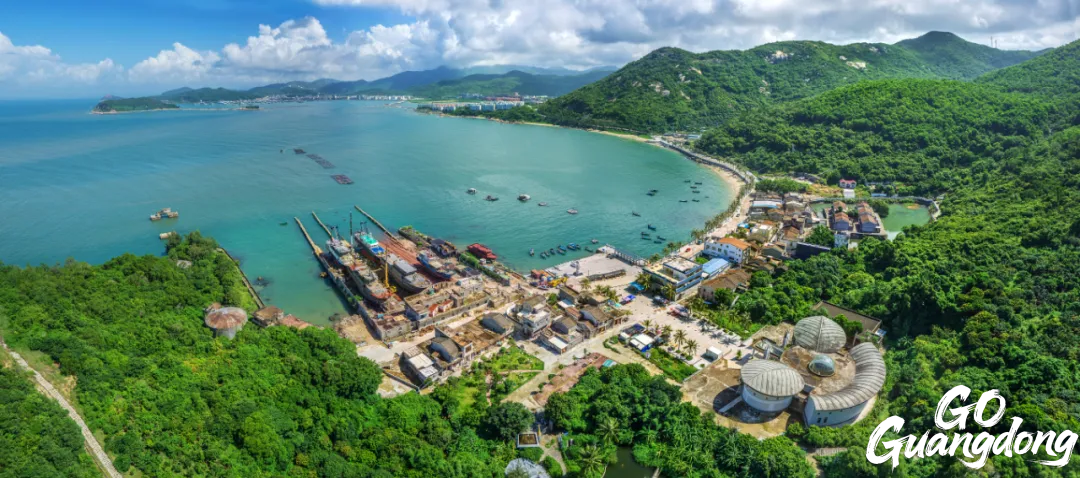
Photo by 广东阳江发布
There was no demolition during the renovation, every building and street was restored exactly as they were. Approaching the village, you will be immediately attracted by the unique scenery. Over 80 intact Tanka ethnic residences are well preserved here.
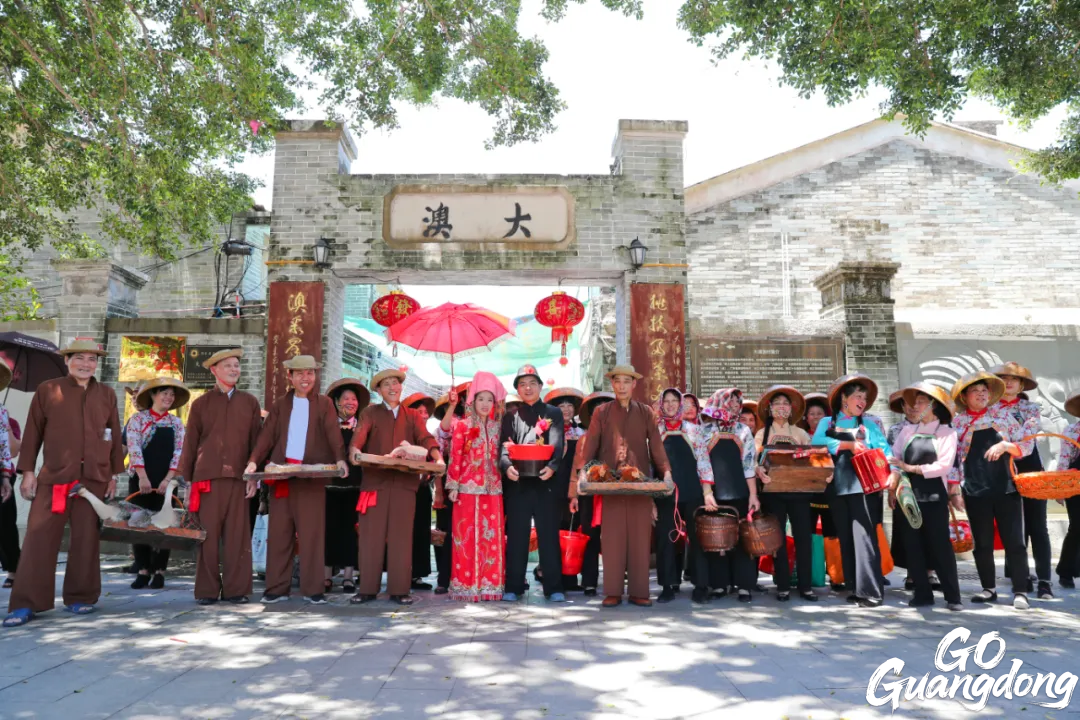
Tanka wedding custom, photo by 广东阳江发布
On either side of the high streets dating back to the Ming and Qing Dynasties, stand the historic buildings, including a Tanka lifestyle museum, a boat craftsmanship exhibition hall, a shrimp paste workshop, and the building of Da'ao Chamber of Commerce. Ancient sites such as watchtowers, the Grave of Million People, and the Qingyan Silver Treasury offer visitors glimpses into the history. The village also houses China's first fishing folk custom museum.
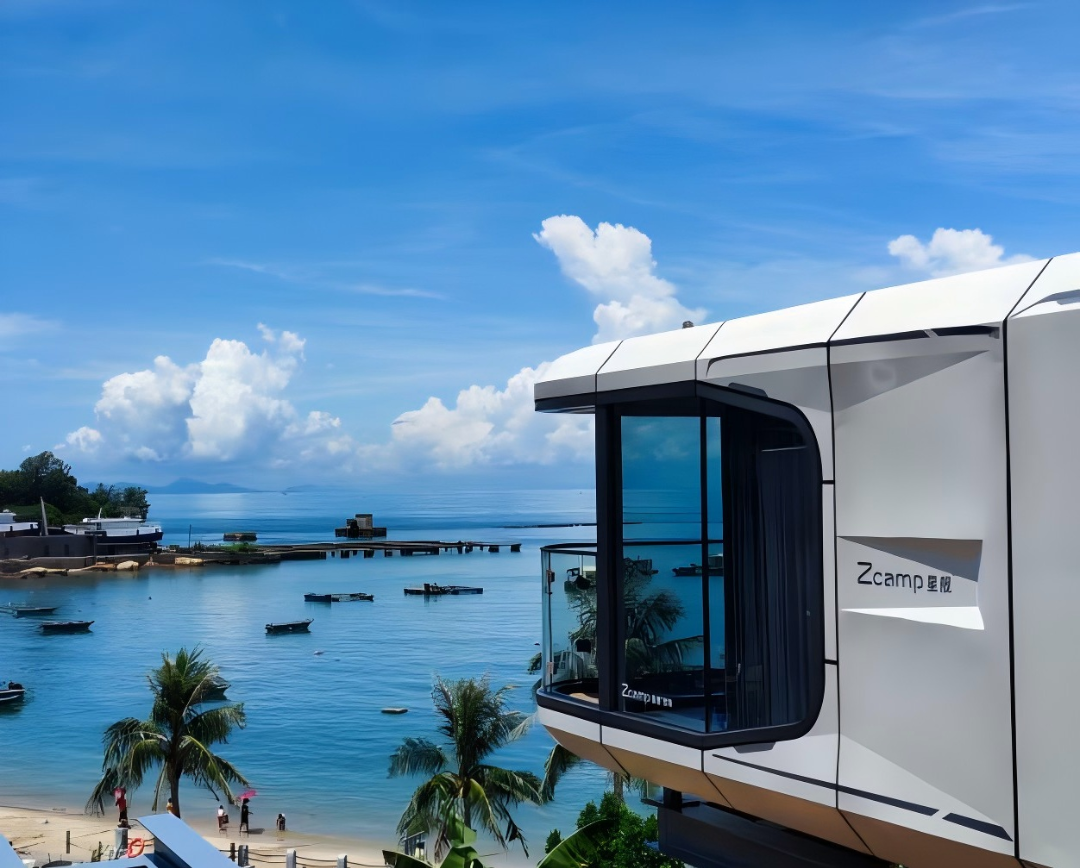
Seaside Starry Sky Cabins, photo by 文明阳东
Da'ao also witnesses an innovative collaboration between state-owned enterprises and rural cooperative, which has enhanced the local tourism and boosted villagers' income.
Nestled between mountains and the sea, modern vacation facilities such as Starry Sky Cabins and Earth Cabins have been constructed. The picturesque seaside offers urban visitors an escape to a slower pace of life. Accordingly, the Starry Sky Cabins generate RMB 30,000 to 50,000 in monthly revenue for the owners. Wooden cottages and family camps nearby are also popular among visitors.
Leveraging rural home-stay development, local fishermen have expanded their businesses into seafood processing, specialty cuisine, and cultural and creative products. The historic fishing village is writing a new chapter in its story, drawing on its profound maritime heritage.
Address: Da'ao Fishing Culture Village, Dongping Town, Yangdong District, Yangjiang City
Opening Hours: All day

An iconic sculpture in the village, photo by 广东阳江发布
Tanka Residences
Da'ao's ancient Tanka residences, dating back to the Qing Dynasty, are the only reserved houses of their kind in China. Modeled after fishing boats, these narrow, elongated houses have two floors. The ground floor comprises cabin-like rooms for daily living. The upper floor serves as a single dormitory-style bedroom. Beds are arranged on both sides, separated by nets. Positions are arranged according to family members' ages and genders.
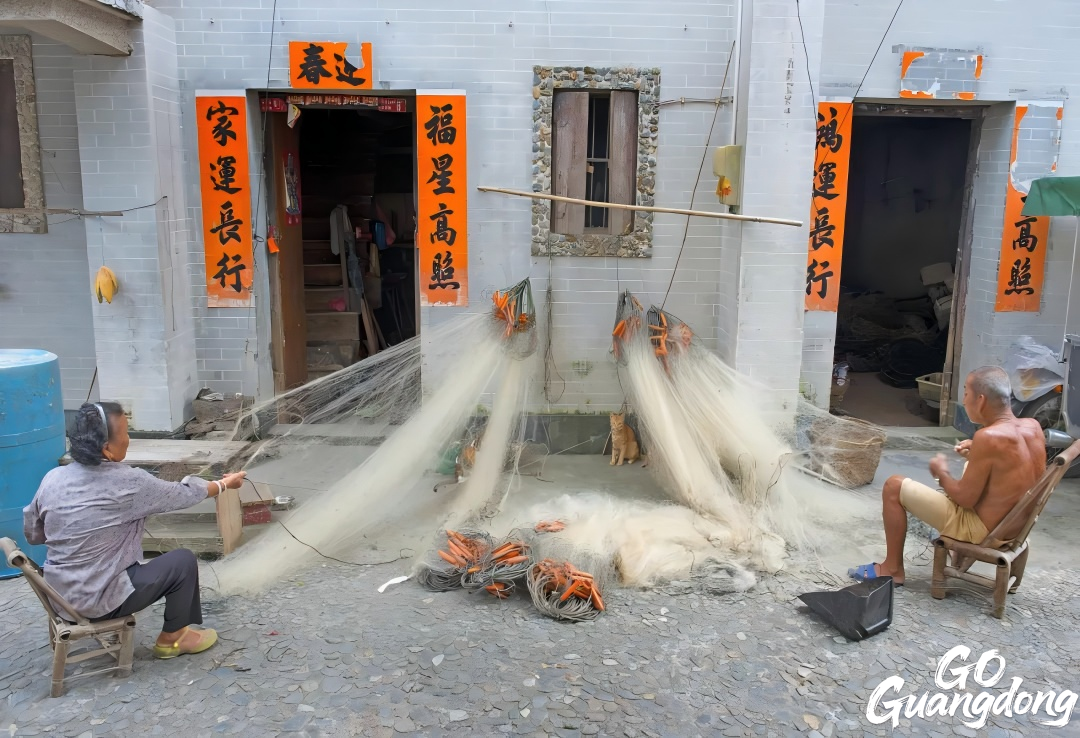
Fisher family weaving nets in their residence, photo by 广东阳江发布
Ming-Qing Style Street
The street is 380 meters long and 4 meters wide, where the ancient styles and artifacts of the Ming and Qing Dynasties remain till today. Over 80 cabin-shaped Tanka residences line up on both sides. Each house comprises a shop in the front and a workshop or residence in the backyard, showcasing the unique Tanka living habits. Today, fishermen operate their business in these residences, including seafood retail, seafood restaurants, and net weaving, carrying on the maritime heritage.
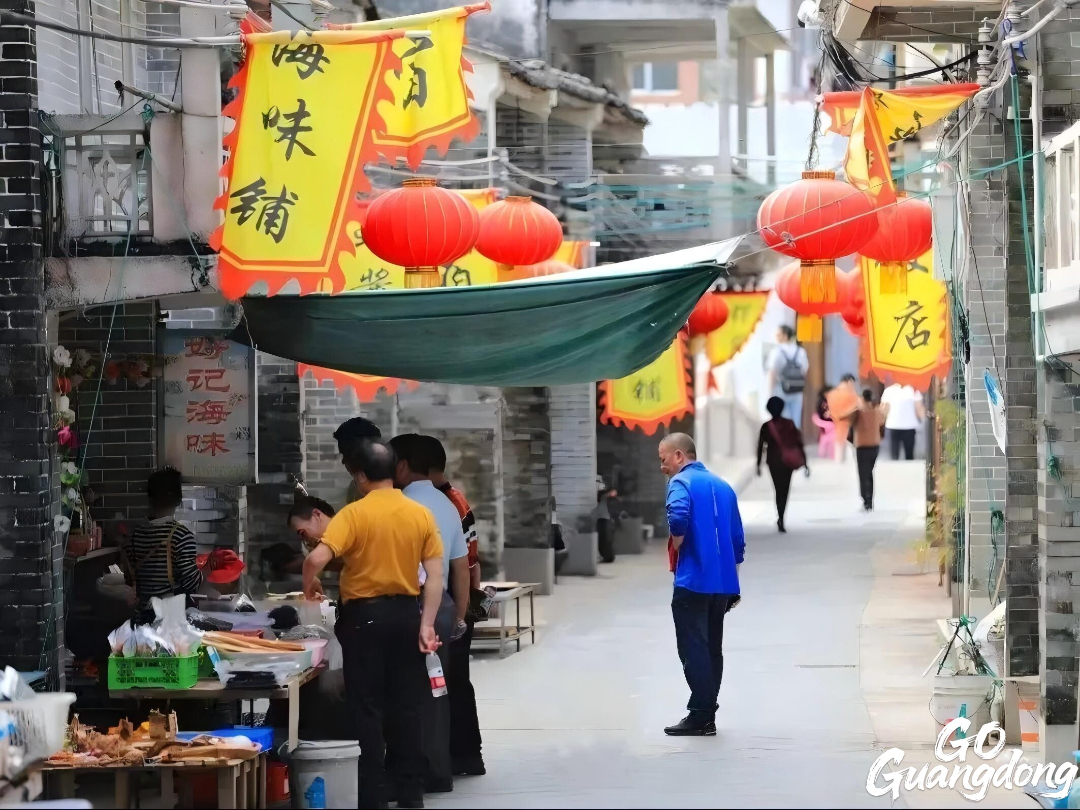
The Ming-Qing style streets in the village, photo by 阳江广播电视台
Da'ao Chamber of Commerce Building
Among the ancient houses on the street, a brick-and-wood building in western-style stands out. It's the former site of the Da'ao Chamber of Commerce.
Established in 1923, the Chamber moved into this building in 1931. Spanning over 140 square meters, the complex includes a two-story main building and a three-story treasury (serving as a bank). The building features a solid construction with thick walls and gun emplacements. This turns the building into a fortress to provide shelter for villagers and safeguard valuables during pirate raids.
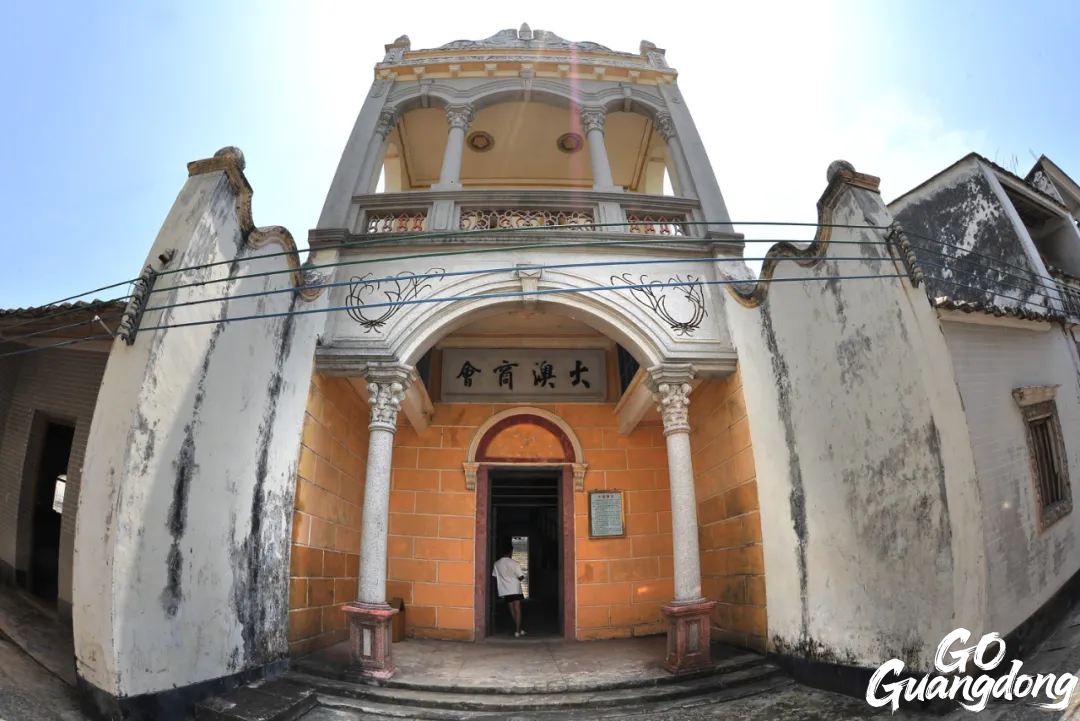
The Chamber building, photo by 广东阳江发布
The building once served as a liaison point for the People's Liberation Army of China and a command center for the Communist Party of China. After liberation, it housed Da'ao Middle School and local government offices.
Today, visitors can learn about Da'ao, including its development and history here.
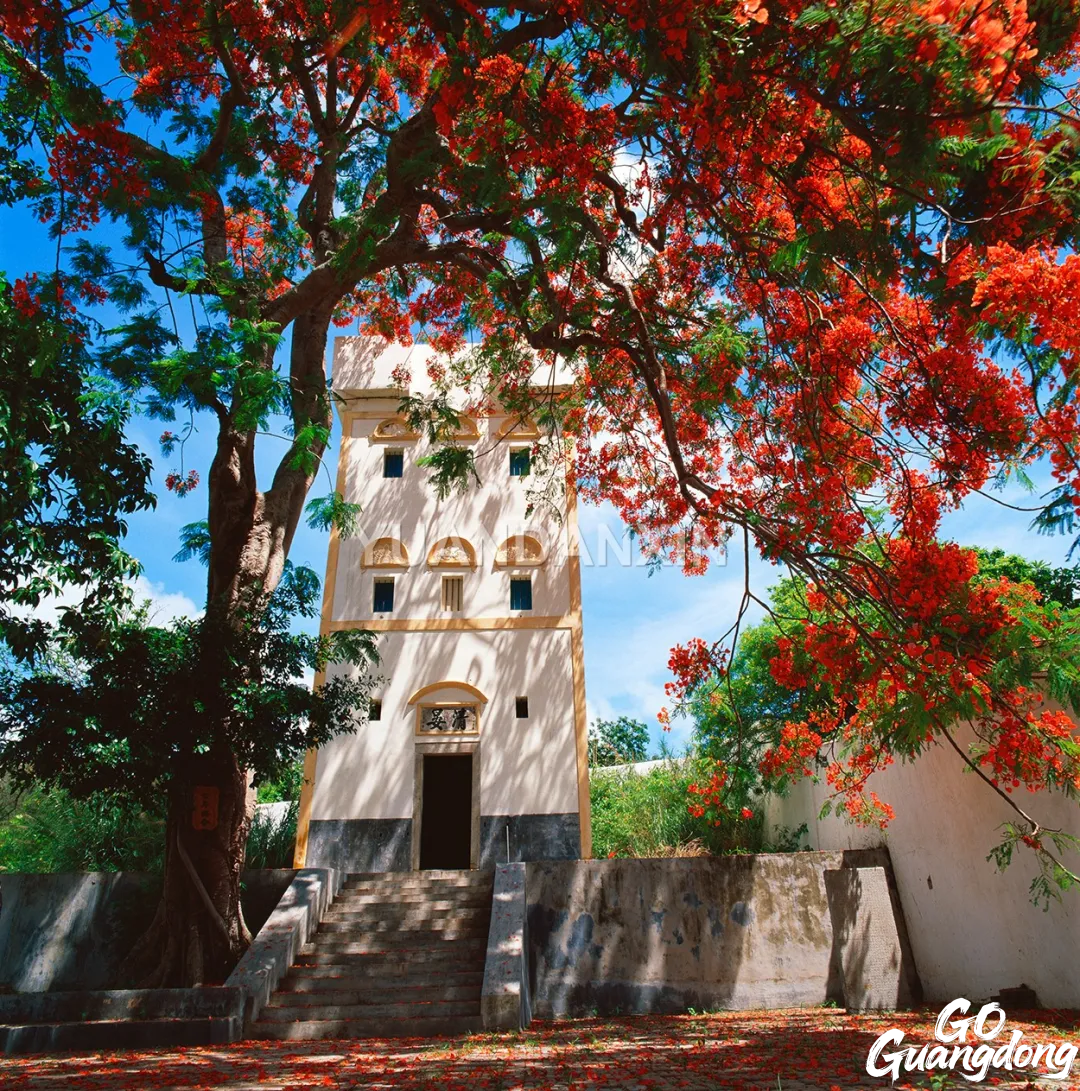
The treasury building, photo by 广东阳江发布
The Grave of Million People
As a major Maritime Silk Road port and thriving fishing hub, Da'ao saw frequent shipwrecks and a constant flow of merchants. During the Japanese occupation, countless people were executed on Nanpeng Island and dumped at sea. Kind-hearted local villagers collected the unidentified remains of shipwreck victims and those killed by the Japanese, burying them in a cave behind the village. Over generations, the mound accumulated countless bones, forming the grave of million people.
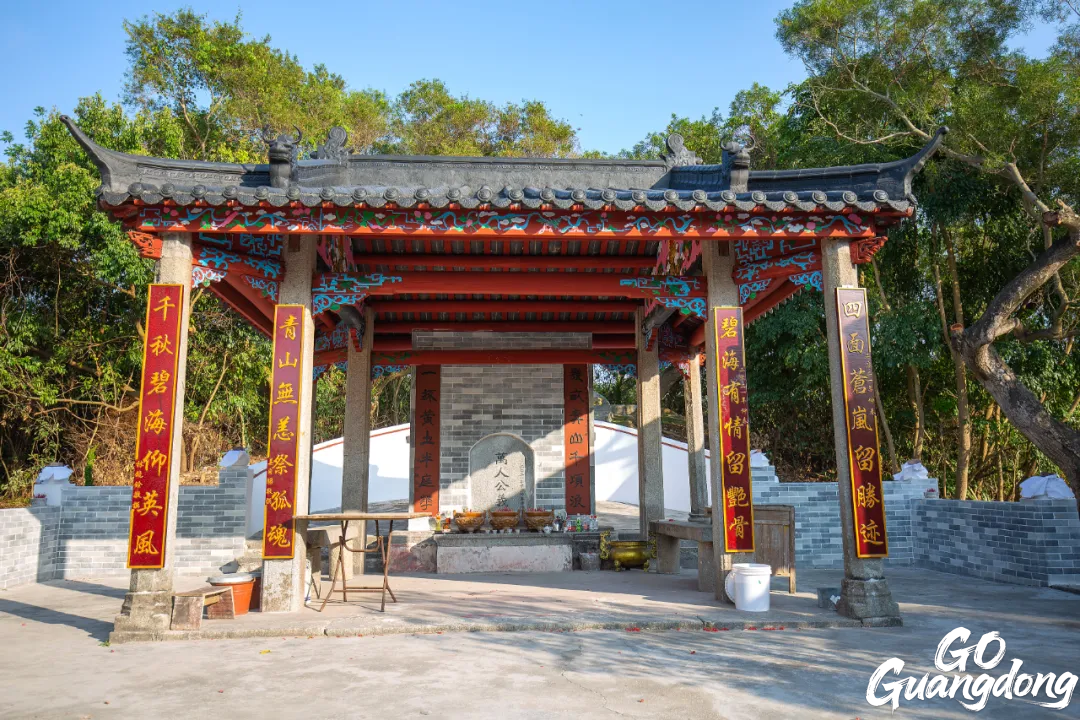
The Grave of Million People, photo by 广东阳江发布
Fishing Folk Custom Museum (within the Yangdong District Museum)
Walking toward the end of the village, a peach leaf-shaped building sits in front of you. It is the Fishing Folk Custom Museum of Da'ao Fishing Village.
Established in 2001, this was China's first museum dedicated to the fishing culture. Spanning 12,600 square meters and standing 12.8 meters tall, it was incorporated into the Yangdong District Museum in 2021.
The collection includes precious shells, fishery harvesting products, large marine mammal skeletons, and imitations of wooden boats from the Song Dynasty. It also houses over 5,000 pieces of fishing gear and Tanka marriage artifacts. What cannot be missed are the compilations of history and stories of fishers and the series of sculptures depicting fishing organized here.
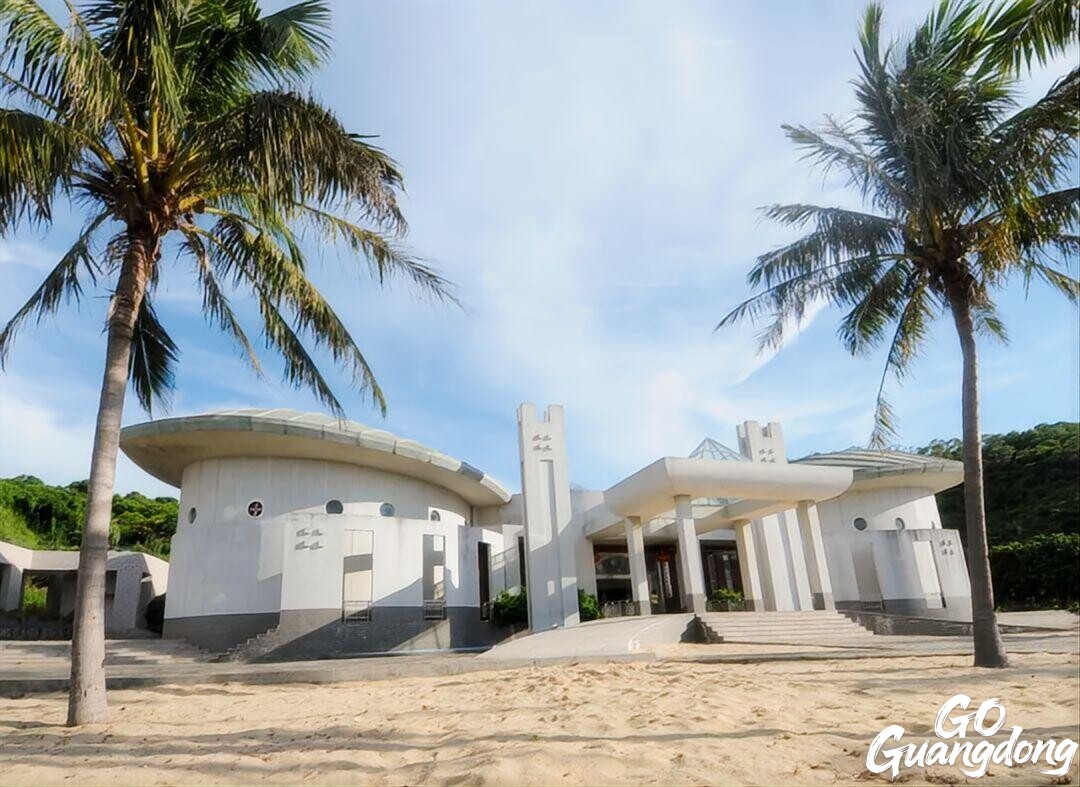
Fishing Folk Custom Museum, photo by 阳江广播电视台
Reporter丨Zhou Jiyin
Editor丨Yin Juewen