




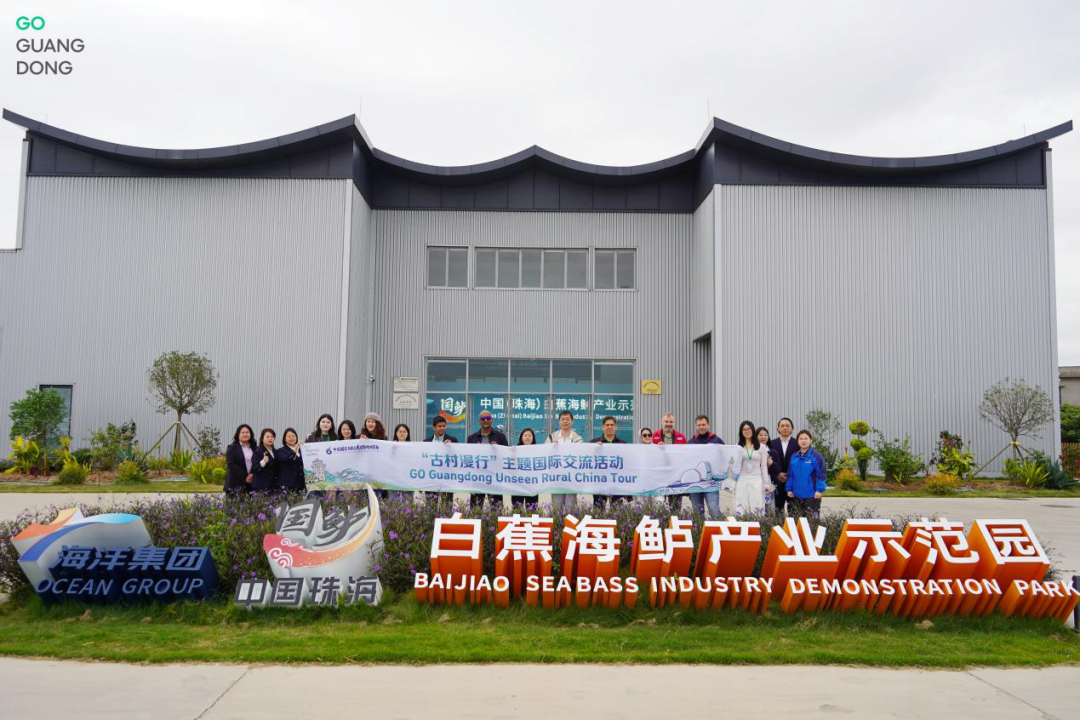
The delegation explores the sea bass industry in Baijiao Town, Doumen District, Zhuhai City.
Standing alongside the sea bass farming pond, Josaia Gonewai, Special Administrator of Fiji's Suva City Council, gained insight into the farming skills and technologies in Zhuhai's Baijiao Town, which is known as the capital of sea bass in China. He took notes in detail and considers Chinese experiences valuable to Global South countries.
Ahead of the ongoing 2025 Understanding China Conference, a delegation of participating dignitaries and journalists from both domestic and international locations visited Zhuhai and Jiangmen. Their goal was to explore the effective practices China has implemented to drive rural development through agricultural projects and community participation.
Modern aquaculture presents potential for South-South cooperation
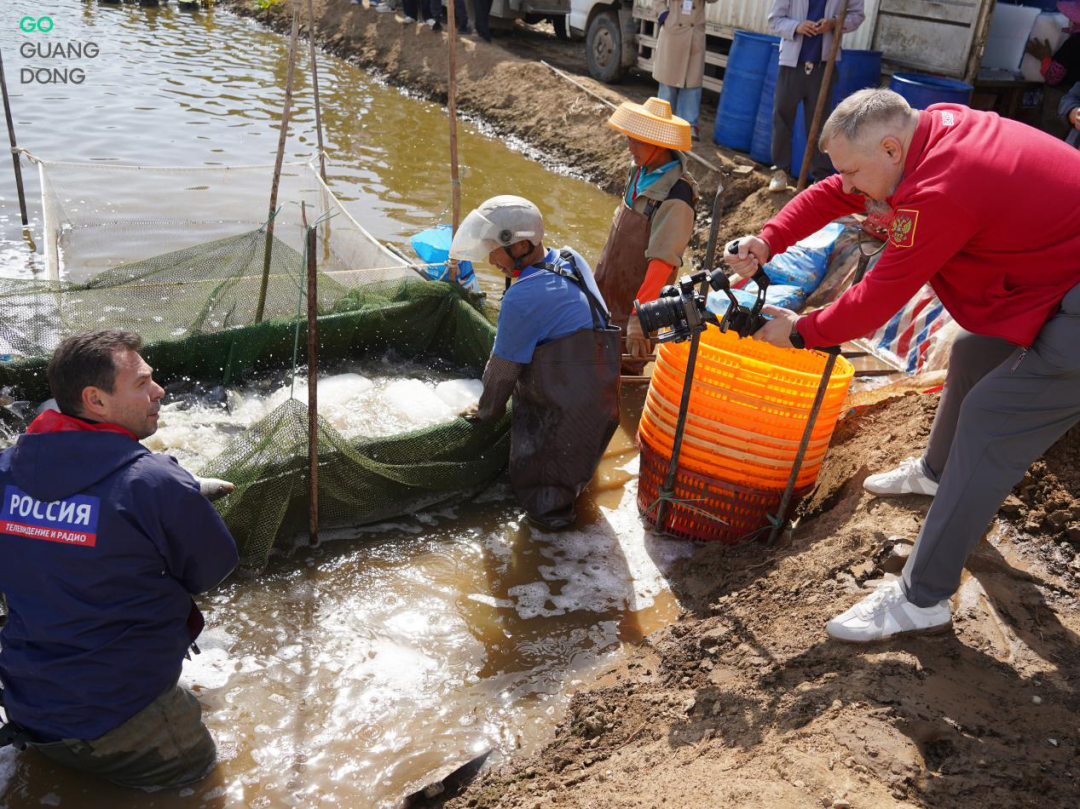
The delegation learns about the sea bass farming in Baijiao Town.
To capture firsthand images of sea bass farming, Alexander Balitskiy, Chief of the RTR Bureau in China, borrowed a fisherman's suit and stood alongside the fishermen harvesting fish in the pond. He explained that most overseas audiences consider Guangdong an industrial province with air quality that may not be as good as in other provinces. However, this trip gave him a new impression.
Baijiao Town started sea bass farming in the 1980s and has now become China's largest production base. It has built a complete industrial chain spanning seedling breeding, ecological aquaculture, and deep processing. The sector now generates an annual output value nearing RMB 20 billion, accounting for 70 percent of national sea bass production while supporting over 8,000 households and creating more than 40,000 jobs.
It was a surprise for Balitskiy to see that these sizable ecological farming companies have integrated technology with agricultural practices in Guangdong. He said, "more people should know that green development is also happening here". He highlighted that China and Russia have formed a close partnership in the aquaculture sector. Through this trip, he believes the two countries see potential for further cooperation in the trade of premium agricultural products.
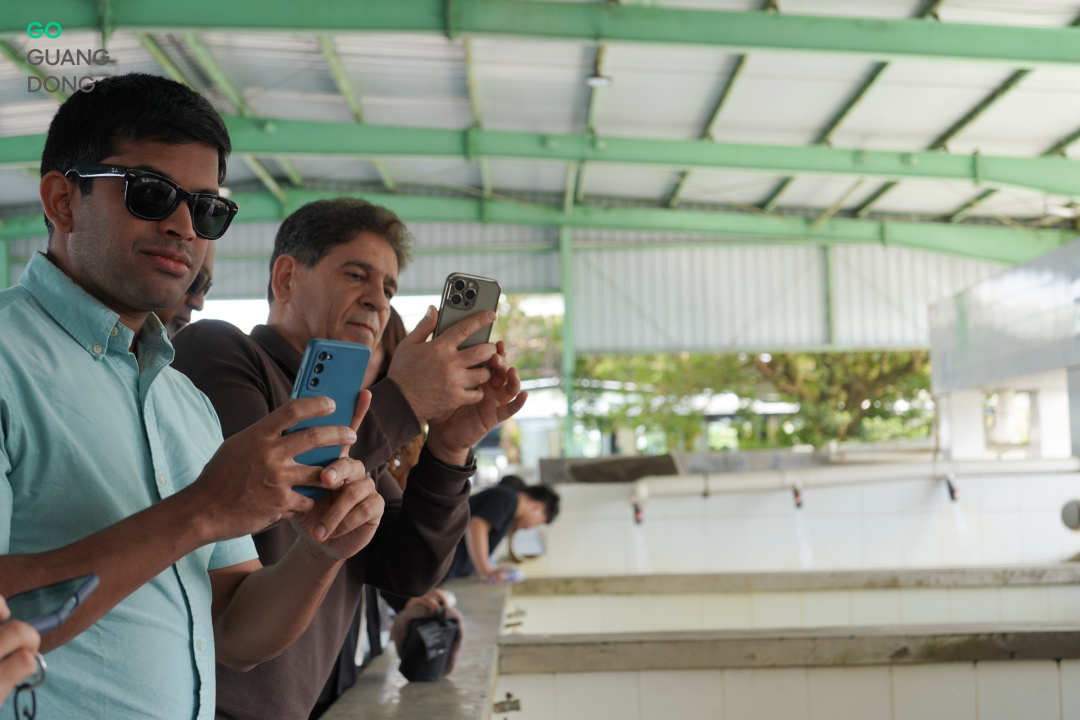
The delegation visits a eel processing company.
In addition, the delegation visited the renowned eel industry in Taishan, Jiangmen, where local professionals provided detailed information about effective eel farming and processing techniques while answering questions from the guests. Josaia Gonewai highly praised Guangdong's modernized aquaculture, particularly its smart farming equipment, prepared food production lines, and the cooperative model between companies and farmers, which has helped maximize value addition and expand international markets.
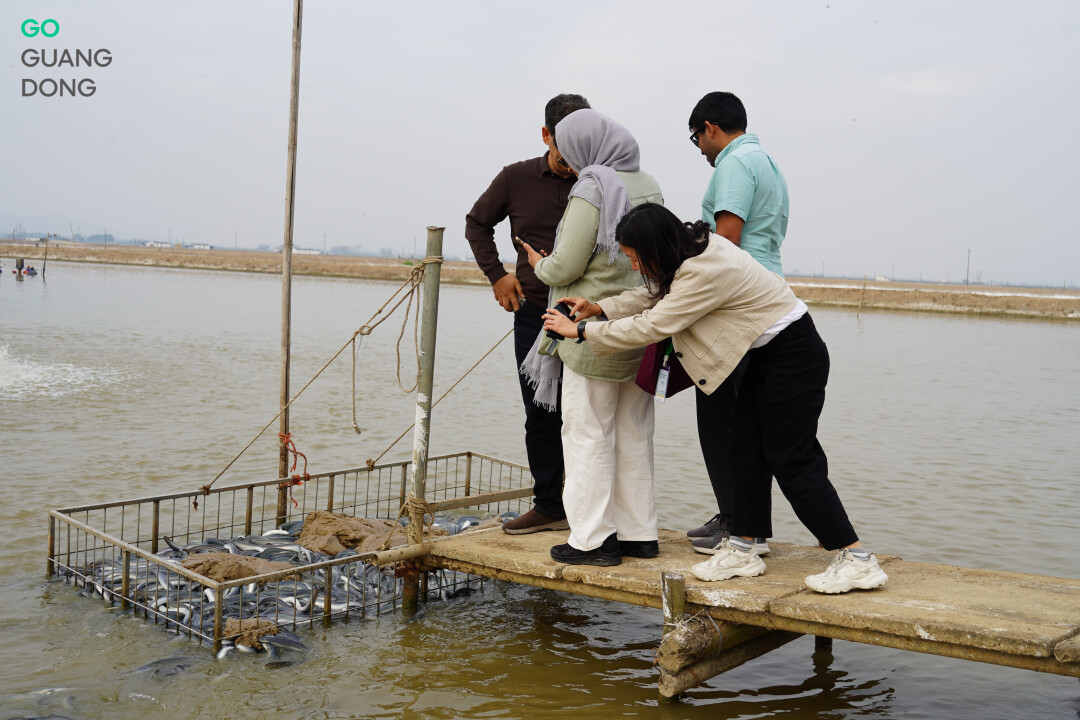
The delegation explores the eel feeding process.
Farmers in Taishan have been engaged in eel farming since 1893, specializing in the cultivation of Japanese eel. To date, Taishan has become the largest eel farming and export base in China and accounting for over 60 percent of the nation's live eel exports. Its eel products have been exported to more than 30 countries and regions, with approximately 70 percent of exports destined for Japan, 20 percent for South Korea, and 10 percent for other international markets.
Josaia Gonewai hopes that China will share its farming techniques and successful experiences to help Fiji utilize its eel resources, creating an ideal model of South-South cooperation. "I requested the head of Jiangmen's eel farming company for further cooperation, as this is a great opportunity for Pacific students to come over and learn. The potential of the eel industry is substantial if we can develop it from a local delicacy into an exportable commodity through stable quality and quantity of production."
Gonewai further emphasized that this development model does not conflict with environmental protection. He praised China as a key partner for Fiji in addressing climate change, stressing that "we do not need to resort to overfishing. Instead, we can use aquaculture and sustainable exploitation to generate economic value, as we have seen in Guangdong."
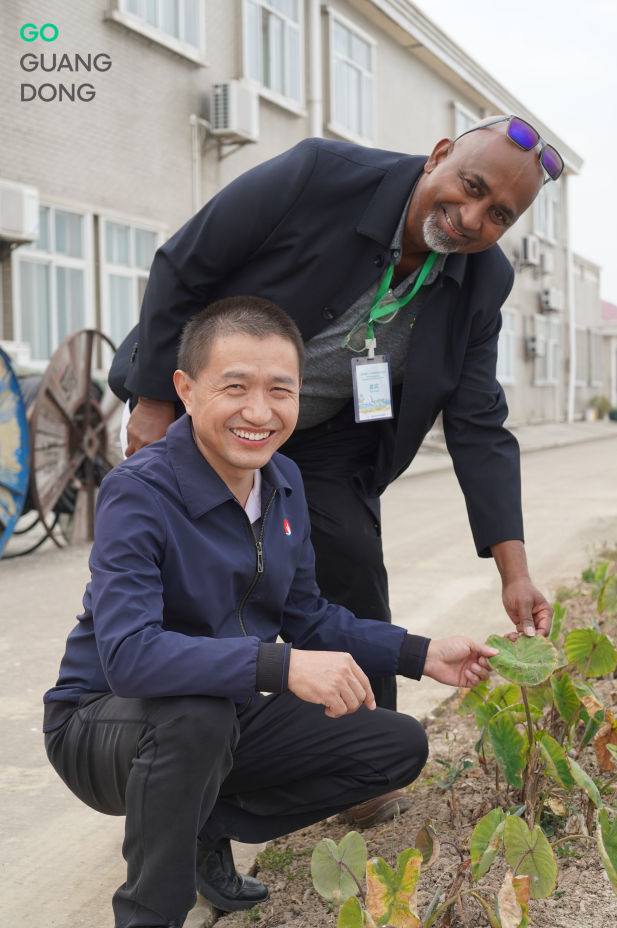
Josaia Gonewai (R), and Xu Aining (L), head of the eel farming company
Community engagement highlighted in ancient village revitalization
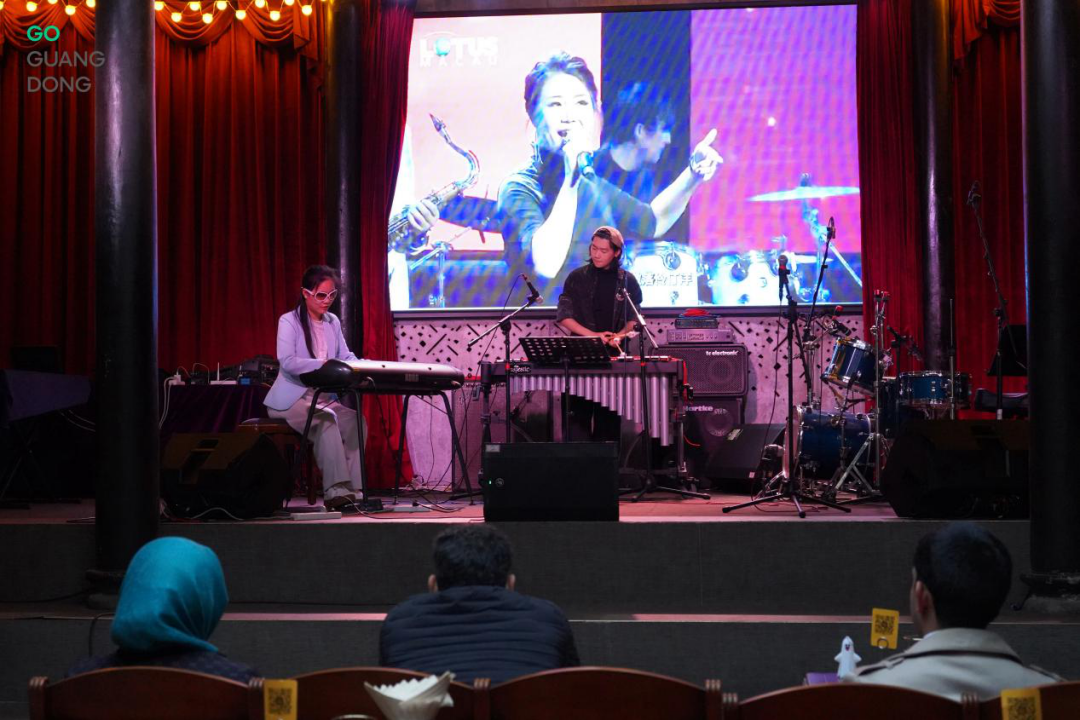
The delegation enjoys a Cantonese-style jazz performance in Beishan Village, Zhuhai.
Beyond rural industrial development, community participation is crucial for sustainable revitalization. In Zhuhai's Beishan Village, the delegation was treated to a Cantonese-style jazz performance at the Longxi Yang Ancestral Hall, Beishan's oldest surviving building, which has been restored as the Golden Jazz Art Center. Through the establishment of the art center and a series of international jazz events, the 780-year-old village has gained new vitality and attracted tourists and new residents from home and abroad.
Reza Pirpiran, Counsellor at the Embassy of Iran in China, believes that transforming an ancient site into an art center can attract younger generations interested in jazz music. "I was very impressed that an old village has been transformed into a scenic spot where visitors and tourists can come and enjoy themselves. This has created great opportunities for local people, helping to prevent residents from migrating to big cities and thereby avoiding population imbalance," he said.
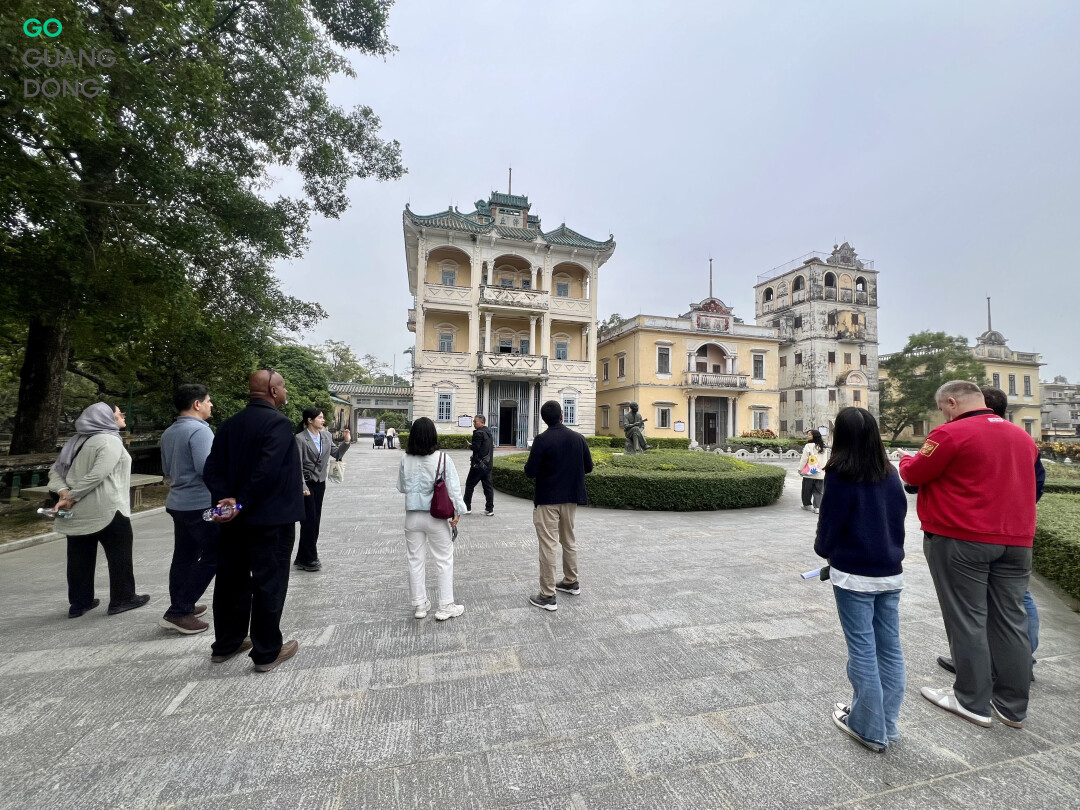
The delegation visits Li Garden.
Jiangmen is a major ancestral home of overseas Chinese and is home to Guangdong's only UNESCO World Cultural Heritage Site, the Kaiping Diaolou and Villages. Having seen the Diaolou firsthand, Balitskiy considers them an excellent example for global visitors to experience the local culture, particularly the unique blend of Western and Eastern influences. He also highlighted how these structures tell a compelling story of successful renovation and conservation efforts that have preserved the buildings to this day.
In Cangdong Village, the delegation gained a deeper understanding of the efforts made to restore the buildings and, more importantly, the emotional bonds among residents and their relatives who may have immigrated overseas generations ago.
Launched in 2009, the Cangdong Project has been advancing living heritage protection through community engagement, the promotion of intangible cultural heritage, and experiential education. Its concept is to preserve not only the historic relics but also the natural landscape as well as the authentic cultural and emotional values, which have inspired the renovation projects ongoing in Jiangmen’s Tangkou Town.
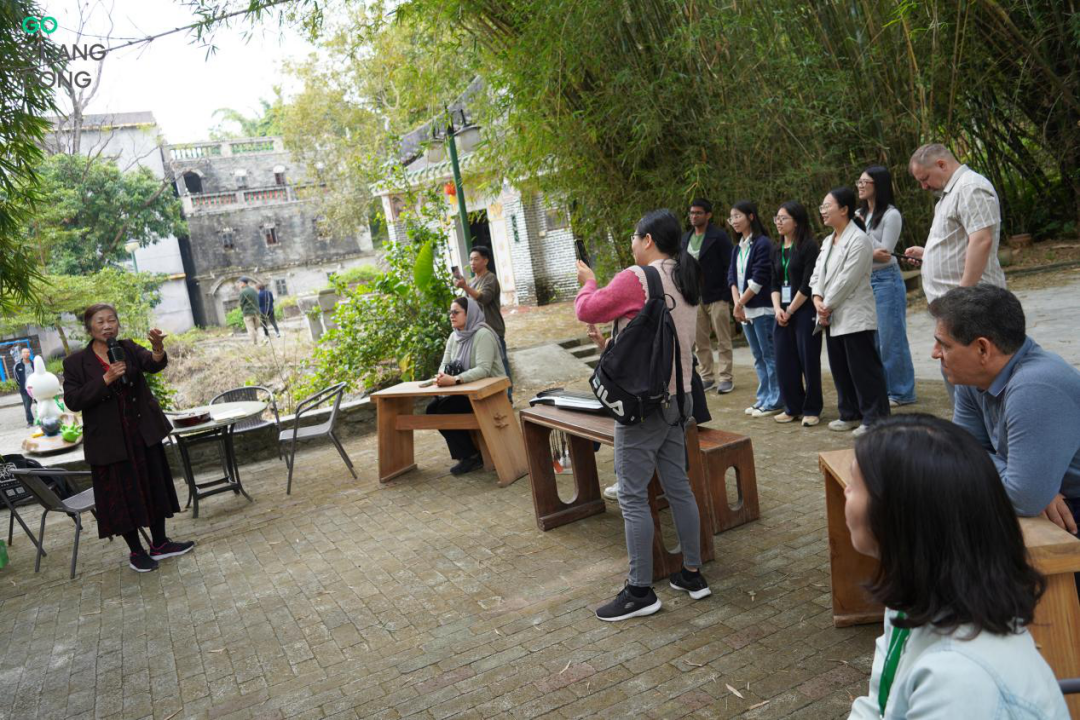
The delegation enjoys a local folk music performance in Cangdong Village, Jiangmen City.
Upon arriving in Cangdong Village, Reza Pirpiran, Counsellor of the Embassy of Iran in China, first asked, "Why didn’t you paint the buildings in brighter colors?" After learning about the concept of "repairing the old as old" and observing how residents enjoy playing local folk music as part of their daily lives, he regarded the experience as a valuable lesson. He then attempted to record a video and share it on social media to inspire others.
"If a plant has no roots, it cannot survive long," Pirpiran shared. "We have a large number of Iranians living overseas, and we also have many beautiful villages that have been left empty due to outbound immigration. We need to look at our history and culture, considering our values, and strive to attract and encourage the younger generation to build their own villages, towns, and country, while strengthening the bonds between residents and those living abroad."
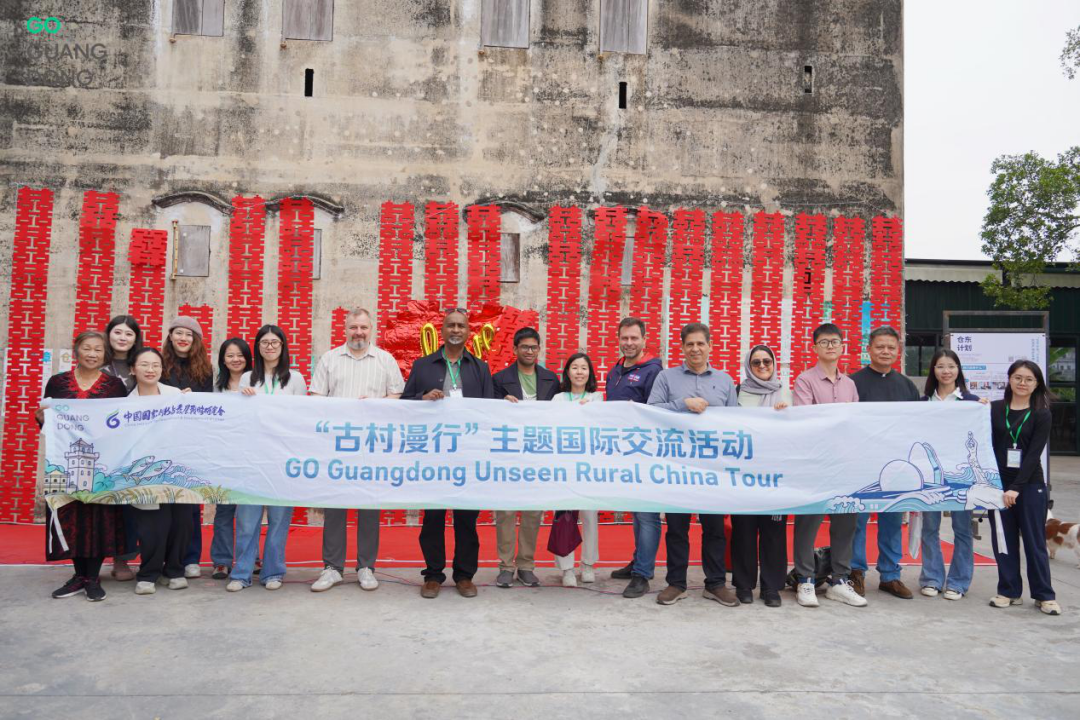
The delegation in Cangdong Village
Reported by Yin Juewen, Ding Hefei, Zhou Hongdou
Photo by Ding Hefei